1874 Overlapping Moon Craters Print
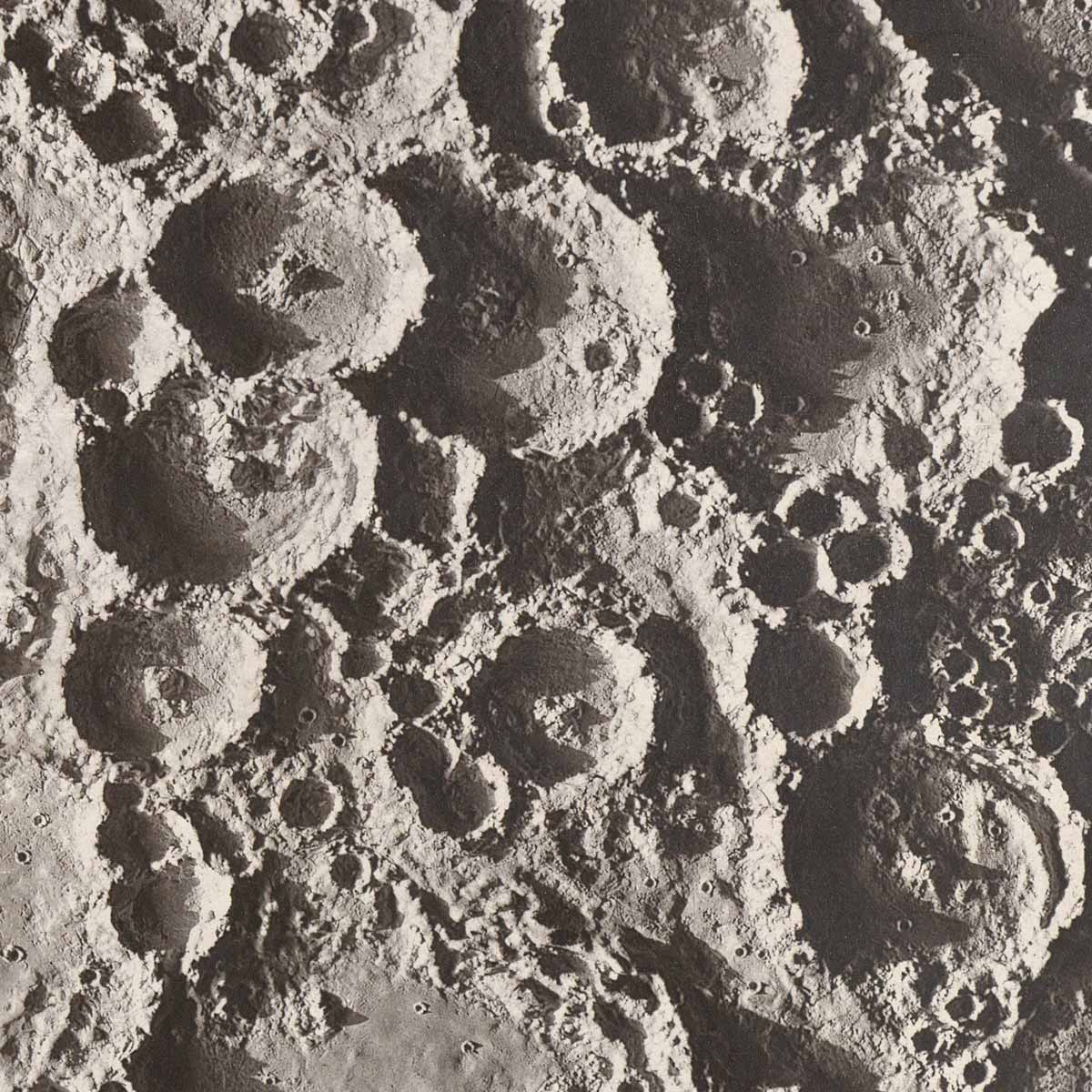
Our reproduction print of Overlaping Craters was originally published in the 1874 book, The Moon: Considered As A Planet, A World, A Satellite, authored by James Nasmyth C.E. and James Carpenter F.R.A.S.
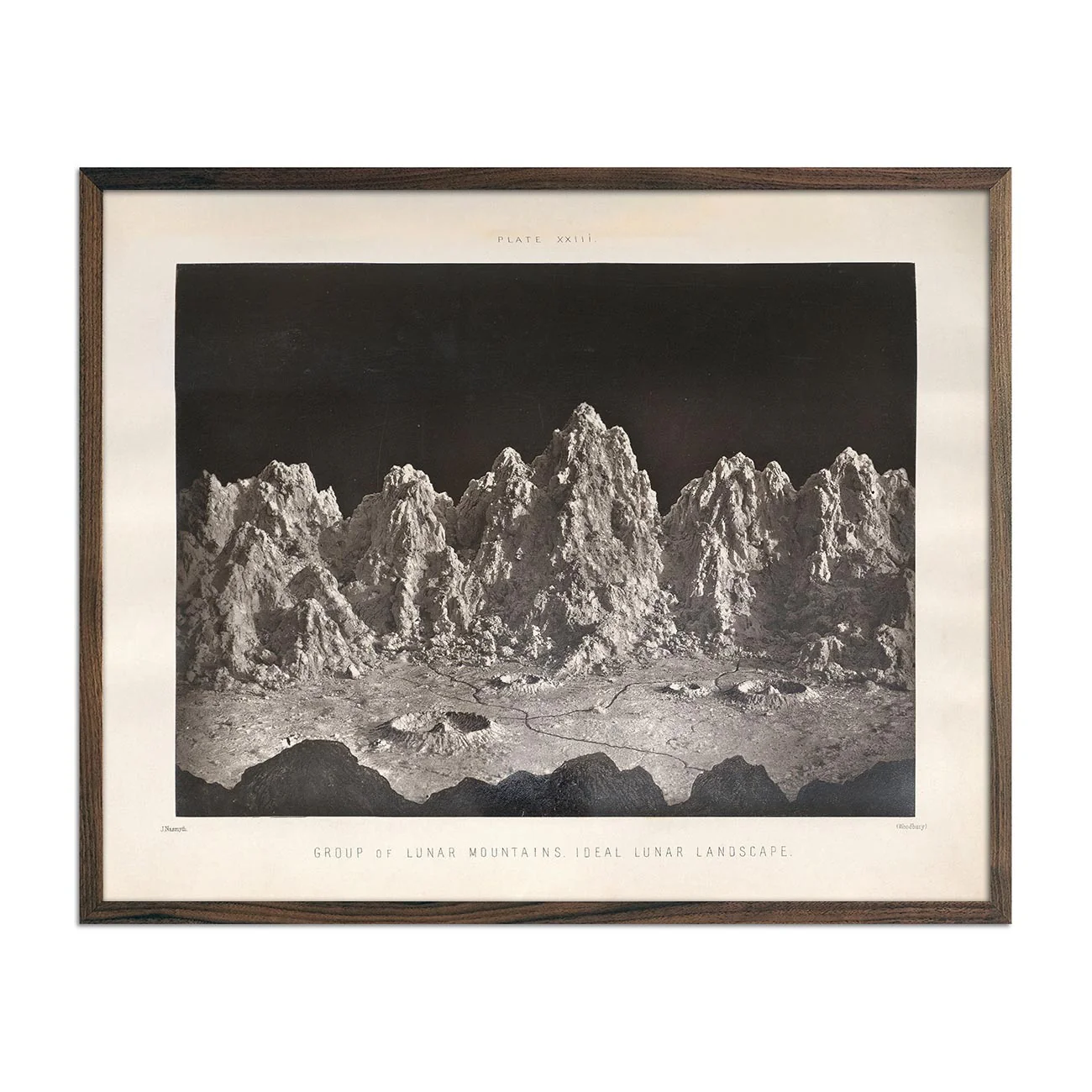
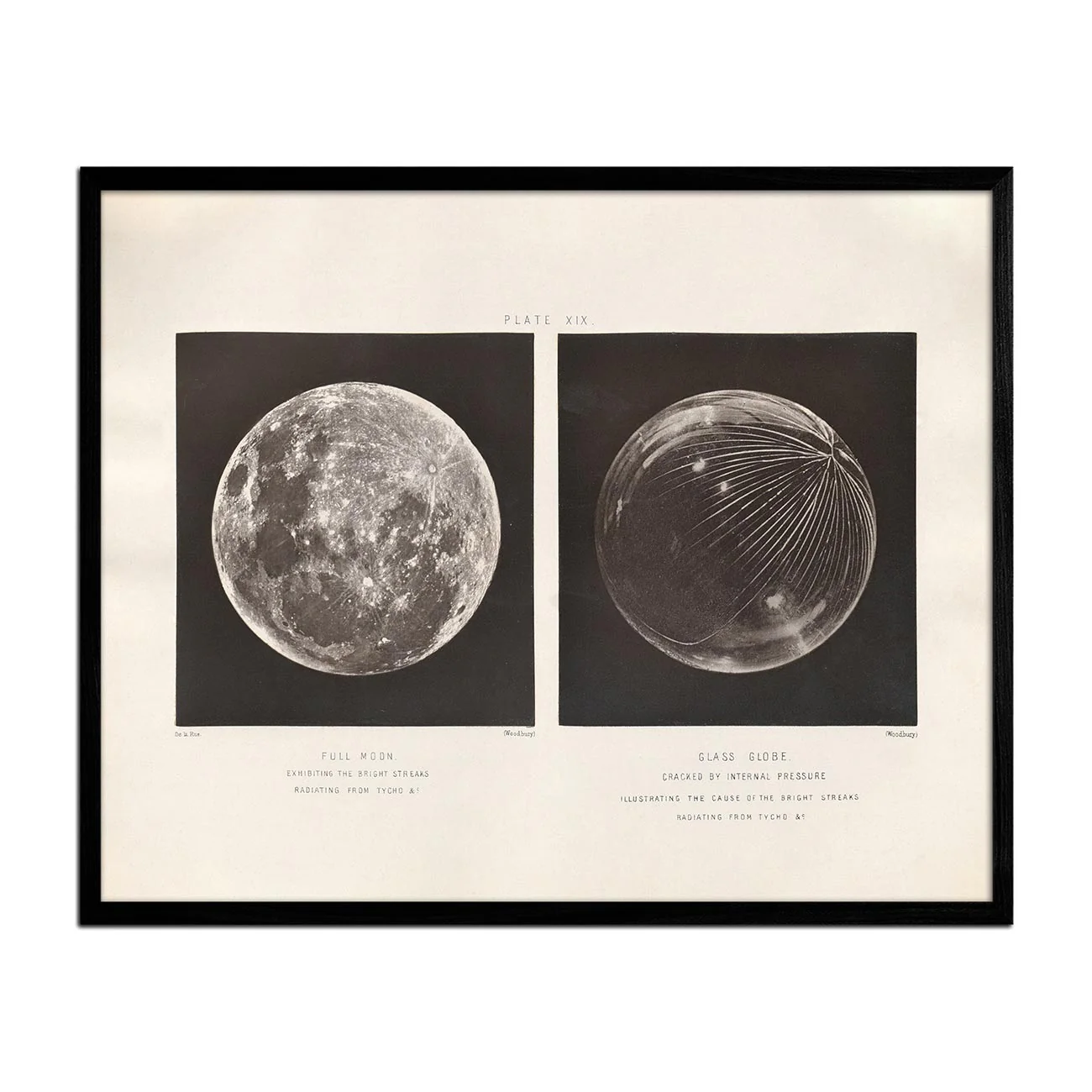
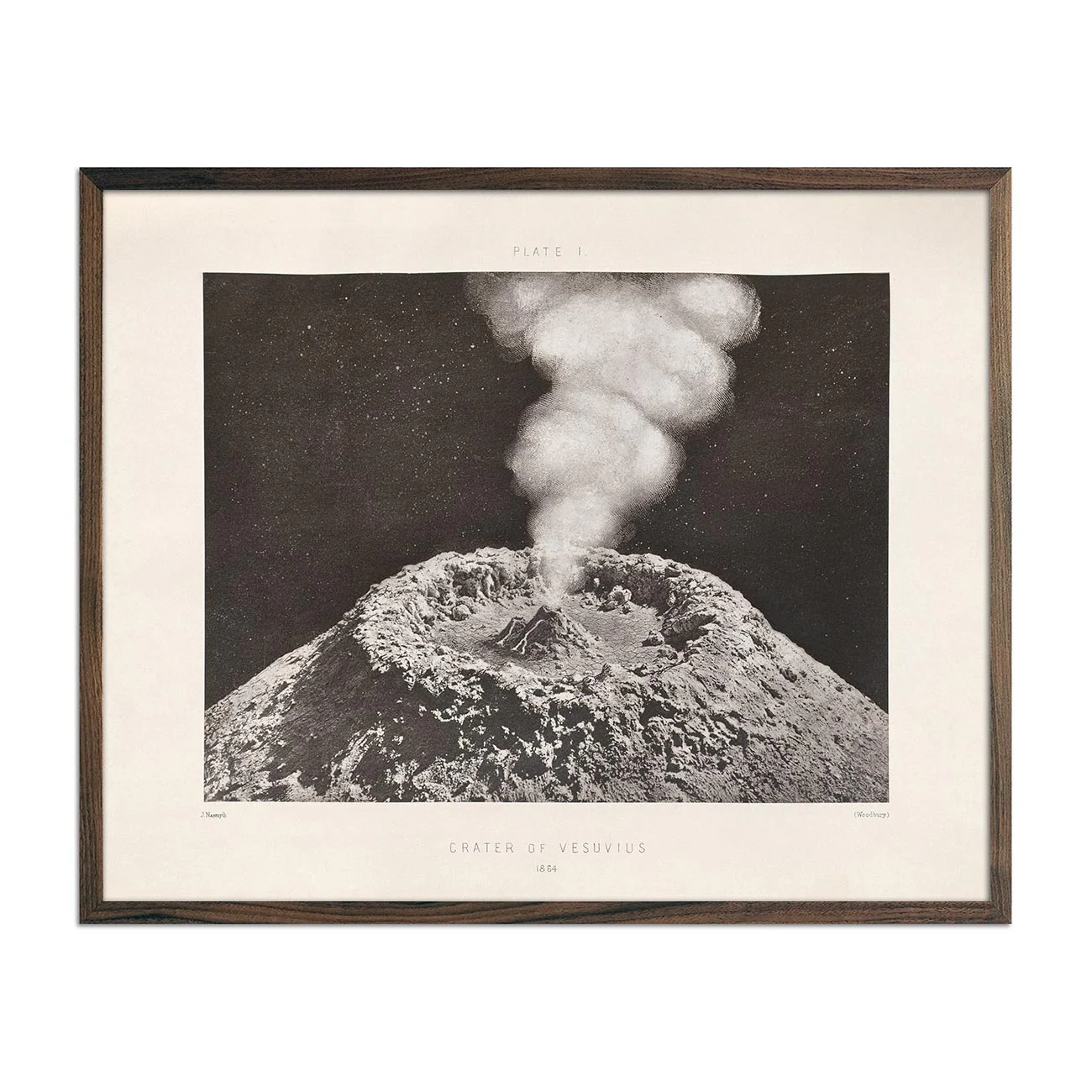
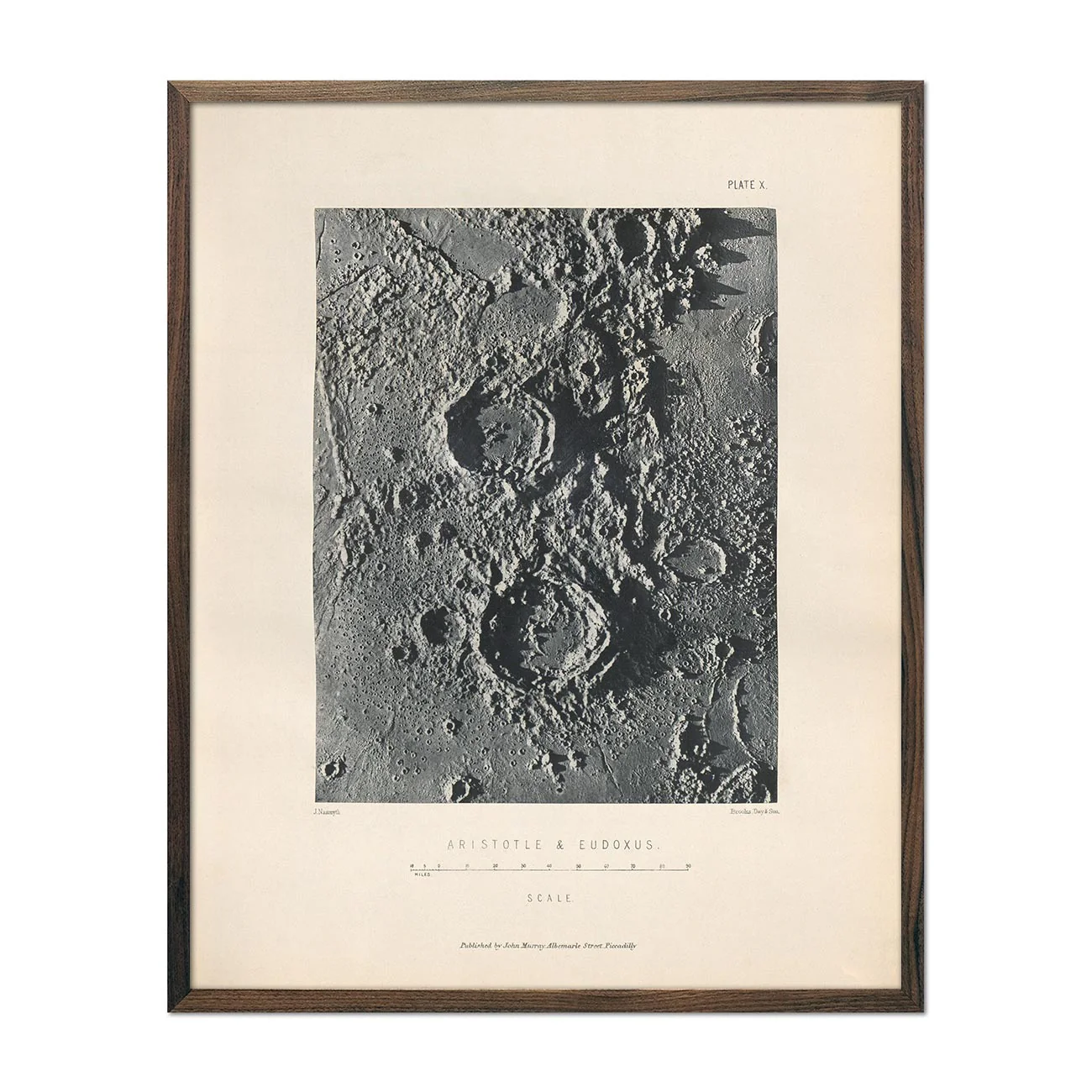
The photos in the book were not actually of the moon because photography was not yet advanced enough to capture lunar details. Instead, Nasmyth photographed detailed plaster models he built of the moon based on his visual observations from the 20" reflector he also built. "For this book, the photographs were then printed by the arduous Woodburytype process, perhaps the most faithful method ever devised for the reproduction of photographs. The Woodburytype has no grain whatsoever, because it does not use cracks or dots to reproduce tone. Instead, a relief mold is made of the image in lead, so that the areas of dark tone are deep and light tone shallow. Ink suspended in gelatin is cast in the mold, and the resulting print produces contrast by the thickness or thinness of the ink." (Linda Hall Library, Face of the Moon)
Product Information
Product Information
Shipping & Returns
Shipping & Returns
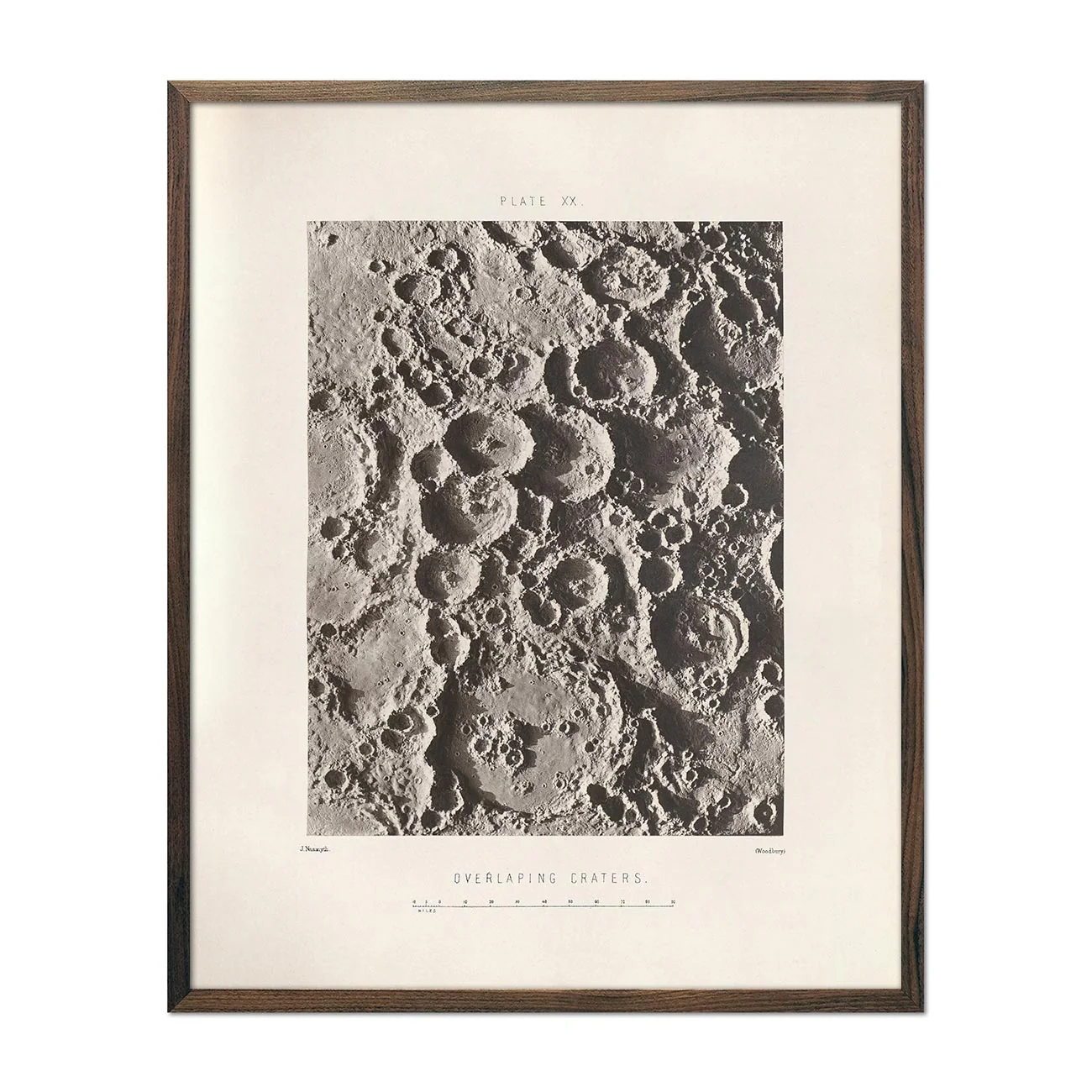
1874 Overlapping Moon Craters Print
1874 Overlapping Moon Craters Print
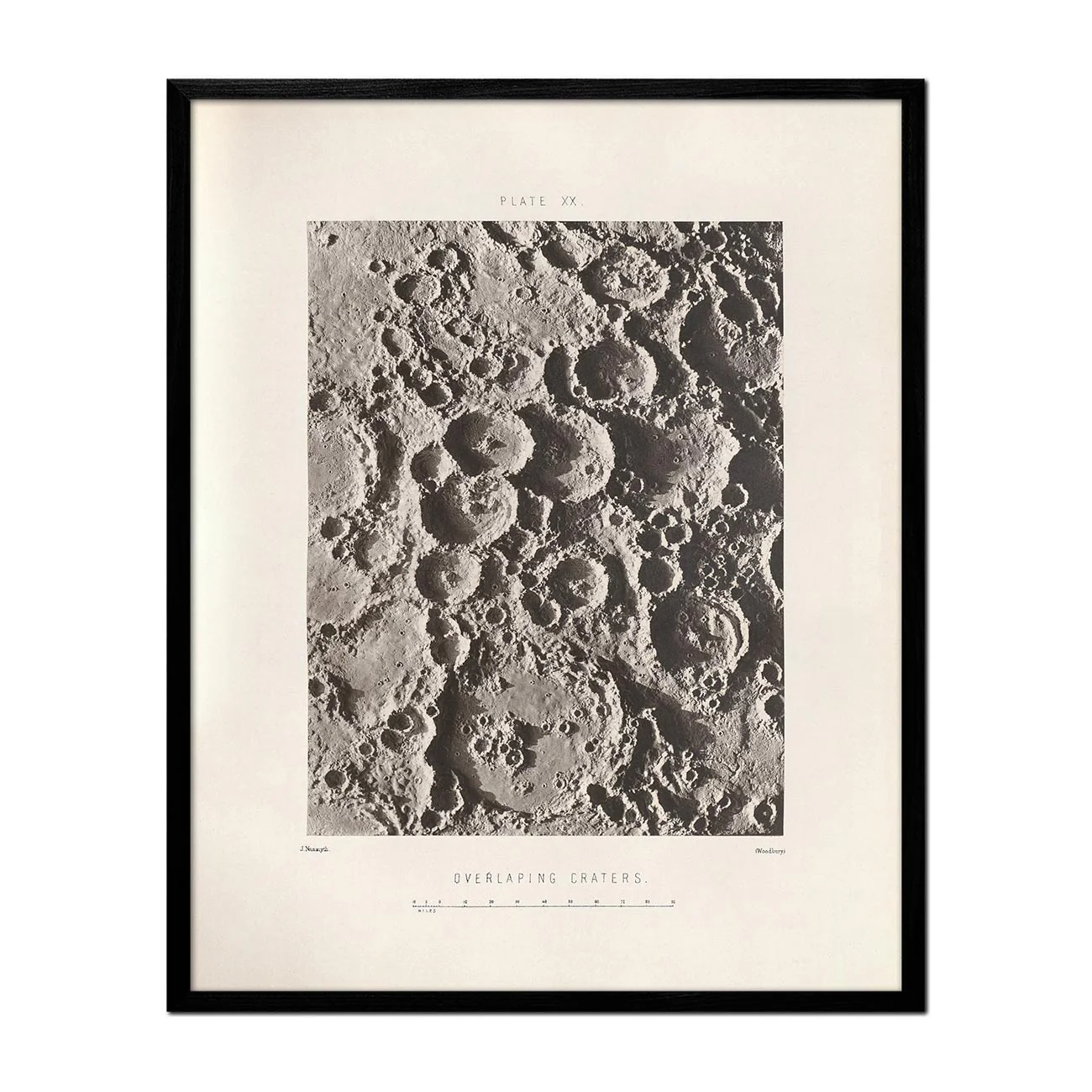
Our reproduction print of Overlaping Craters was originally published in the 1874 book, The Moon: Considered As A Planet, A World, A Satellite, authored by James Nasmyth C.E. and James Carpenter F.R.A.S.
The photos in the book were not actually of the moon because photography was not yet advanced enough to capture lunar details. Instead, Nasmyth photographed detailed plaster models he built of the moon based on his visual observations from the 20" reflector he also built. "For this book, the photographs were then printed by the arduous Woodburytype process, perhaps the most faithful method ever devised for the reproduction of photographs. The Woodburytype has no grain whatsoever, because it does not use cracks or dots to reproduce tone. Instead, a relief mold is made of the image in lead, so that the areas of dark tone are deep and light tone shallow. Ink suspended in gelatin is cast in the mold, and the resulting print produces contrast by the thickness or thinness of the ink." (Linda Hall Library, Face of the Moon)
Original: $1,110,000.00
-70%$1,110,000.00
$333,000.00Product Information
Product Information
Shipping & Returns
Shipping & Returns
Description
Our reproduction print of Overlaping Craters was originally published in the 1874 book, The Moon: Considered As A Planet, A World, A Satellite, authored by James Nasmyth C.E. and James Carpenter F.R.A.S.
The photos in the book were not actually of the moon because photography was not yet advanced enough to capture lunar details. Instead, Nasmyth photographed detailed plaster models he built of the moon based on his visual observations from the 20" reflector he also built. "For this book, the photographs were then printed by the arduous Woodburytype process, perhaps the most faithful method ever devised for the reproduction of photographs. The Woodburytype has no grain whatsoever, because it does not use cracks or dots to reproduce tone. Instead, a relief mold is made of the image in lead, so that the areas of dark tone are deep and light tone shallow. Ink suspended in gelatin is cast in the mold, and the resulting print produces contrast by the thickness or thinness of the ink." (Linda Hall Library, Face of the Moon)